Understanding the Critical Role of Contractors
How to know enough to not feel like an imposter
Last week I shared the many ways you can add value to your real estate investment: asset class by asset class.
Today I will discuss the critical role contractors play in helping you understand costs, refine your business plan, and execute your value add initiatives.
Contractors are the key player in bridging the gap between what you think you might want to do and what you can afford to do.
Have a vision of an amazing new porch on your 6-unit apartment or a new facade on your industrial building? It is all just a concept until you have a realistic sense of costs.
Contractors give you these costs.
Today we will get into the details. You don’t even need to know what a “contractor” is. I will explain it all including:
General contractors vs contractors vs subcontractors.
The role of a general contractor and how they make money.
How to find a contractor and the key questions to ask them.
How to go from an idea to a price estimate to a real bid.
Signing a contract and navigating change orders.
Best practices.
By the end of this newsletter you will know enough to work with a contractor without feeling like an imposter.
Let’s dig in.
General Contractors vs. Contractors vs. Subcontractors
These terms are used casually and often incorrectly. Let’s get them straight.
General Contractor (GC)
A general contractor is in the business of managing construction work across multiple disciplines. Disciplines refer to things like painting, asphalt, electrical, plumbing, etc.
The key word is “general”. They are generalists as opposed to specialists.
They typically don’t have a huge team that does all of the work across disciplines. It is more likely that they subcontract out some or all of the work to others.
Subcontractors
A subcontractor is someone who specializes in a specific discipline such as painting, electrical, or asphalt.
Sometimes they are hired by a general contractor. Sometimes they are hired directly by an owner.
They are specialists in one or more discipline. They are the ones who will actually do the work.
Contractors
The word “contractor” is used as a general term to refer to someone an owner is hiring to do construction work. For example: “We need to find a contractor who will help us with our value add plan.”
It could either refer to a general contractor or a subcontractor.
If you (as owner) hire a “subcontractor” to paint your building, you would likely refer to them as a contractor. They only really become a subcontractor when hired by a general contractor.
Now let’s discuss how a general contractor makes money.
The Role of a General Contractor and How They Make Money
Let’s use an extreme, but not that unusual example, to explain how a general contractor (aka GC) makes money. In this case the GC doesn’t do any of the work. They have a very small team and hire subcontractors to do all of the construction work.
They will typically add one or two line items to the cost reflecting money that is going to them as opposed to the subcontractors.
General Conditions or Overhead and Supervision: this reflects some allocation of their team that will oversee the work on a day-to-day basis.
Profit or Fee: this is the profit they will make on the job.
Combined these two line items will reflect a 15% to 20% increase over what the GC is paying the subcontractors. Example: if you have a $30,000 job, expect to pay an additional $4,500 to $6,000 if you hire a GC. [Pro tip: if you have a much bigger job - example $500,000 - you will likely be able to negotiate a lower percentage.]
So what to you get for this additional cost? Two key things:
Subcontractor Relationships: GCs work with lots of subcontractors. They know the good ones and the bad ones. They can put pressure on one when needed as they may be giving them work in the future. As an owner with one property, you don’t have the same leverage.
Project Management: the GC will manage the day-to-day project. This includes obtaining and evaluating bids, creating subcontracts, and managing the work. The painter doesn’t show up? The GC will deal with it. Timing and coordination issues? The GC will deal with it.
Many owners think the GC earns their fee. Others want to manage the subcontractors themselves.
My perspective: when there are multiple disciplines (aka trades) required such a painting, asphalt, electrical, drywall, and plumbing, I prefer the GC route. When it is only one discipline (ex. painting), I am more likely to go direct to a painter.
Your property, your choice.
Whichever route you take, there are some key questions to ask a potential contractor.
How To Find a Contractor and The Key Questions To Ask Them
Let’s say you have your first property and some value add ideas as discussed in last week’s newsletter: The Many Ways You Can Add Value to Your Real Estate Investment.
Ask your broker and/or property manager which contractors they have worked with and who they would recommend. Then pick one or two to talk with to ask them the following key questions.
How long have you been in business? You want at least five years. Longer is generally better as it shows they run a fair and profitable business.
Are you licensed and insured? It is risky working with a contractor who is not. You could also consider asking for references to speak with.
Is this type of work typical for you? “This type of work” refers to your specific scope of work for your property. You want a contractor who is comfortable with both the scope and size (aka cost) of your job. Don't work with a contractor who only does $500,000+ jobs if you have a $30,000 job.
Do you have in-house design capabilities? Maybe you want to do an exterior renovation that includes painting, wood, and metal work. Many contractors have in-house design teams that can come up with a plan so you don’t have to hire a separate architect or designer.
What components of my scope will require a permit and what is the permitting process? Not all work (ex. painting) requires a permit. Some permitting is fast. Some is slow. Some triggers other upgrades. You want to understand this.
How soon could you get started and what would be your estimated timeline for the work? You don’t want to spend a bunch of time with a group only to learn that they can’t get started for 6 months.
What is your level of interest in working together? You want someone who wants to work with you.
You can see by this list that there is more to selecting a contractor than only costs.
But costs are important so let’s transition to pricing.
How To Go From an Idea To a Price Estimate To a Real Bid
As I described in the last newsletter, there are multiple steps in going from ideas to pricing, most notably understanding what you can afford. The steps are:
Understand your goals.
Focus (aka think).
Talk with experts.
Budgeting. This is where we will focus now.
Develop a game plan.
There are two main stages of budgeting and understanding how much something will cost.
Stage 1: Price Estimate or Rough Order of Magnitude (aka ROM)
This is when you are in the early stage. You need some general sense of how much it will cost to paint vs. redo the parking vs. renovate a kitchen.
A contractor will help you do this, but they will be spec’ing their time to do so without a guarantee of getting the work.
Be mindful of this dynamic and don’t abuse it. Only work with one contractor at this stage.
Stage 2: Contract Pricing
Once you have defined your scope, then you move to getting real bids that you could go to contract on with a contractor.
Some like to get final pricing only from the same contractor that gave you the ROM pricing. Others like to get multiple bids.
Getting multiple bids is more work and guarantees you will have to tell 1-2 contractors they are not getting the work even though they put time and energy into the process.
But there is nothing like getting multiple bids. You always learn something and may find you get better pricing.
You don’t always have to pick the lowest price, but you do get a comfort level that you are not overpaying.
Signing a Contract & Navigating Change Orders
Once you have pricing you are comfortable with, you will move to signing a contract. There are multiple types of contract and ways contractors like to do them.
We will go through all the details of this next week.
Best Practices
So how do you make sense of all this?
Here are what I believe are the best practices.
Interview the contractor. Don’t skip this part. You will learn a lot in the process.
Value their time. Don’t view getting a bid as “free”. It may not cost you anything at the time, but you don’t have unlimited “credit” to exercise contractors for bids forever without at some point paying them to do some work (i.e. giving them a job).
GCs are a good fit when you have multiple disciplines. If only one, consider going directly to a subcontractor.
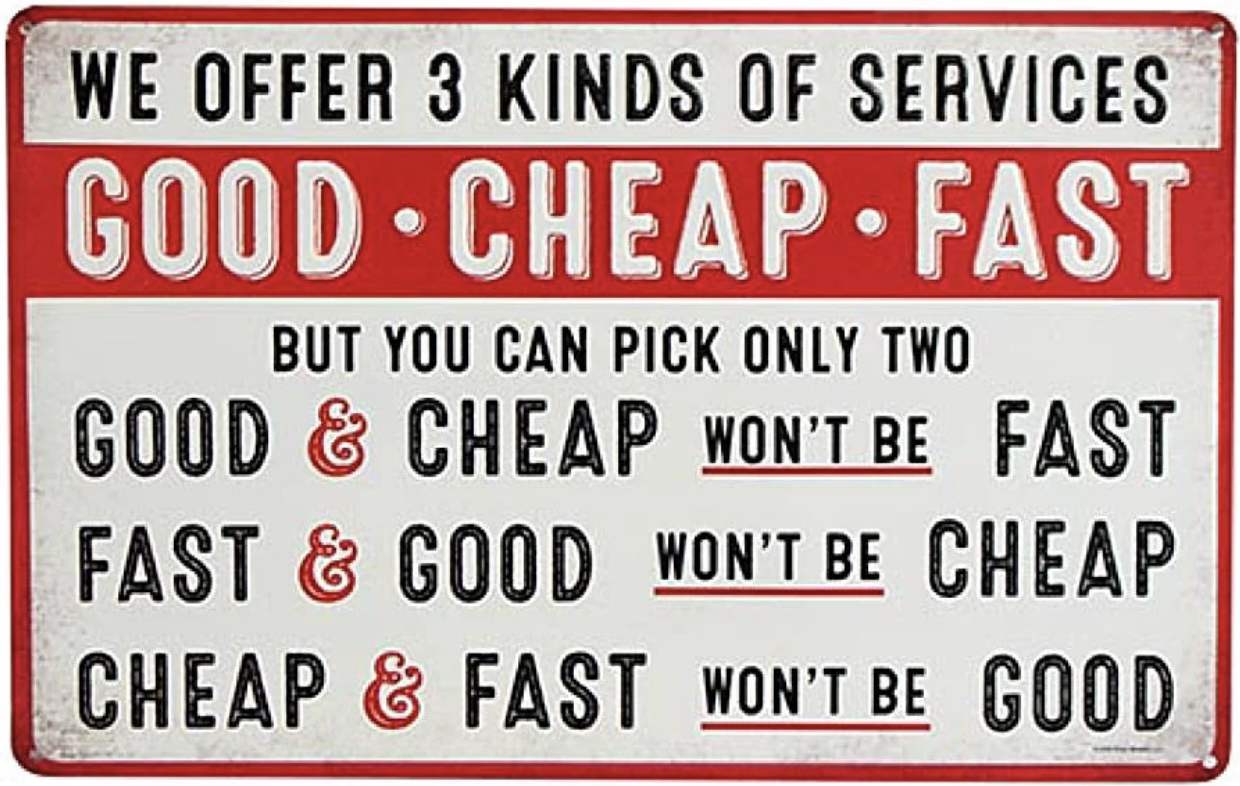
Don’t pick the cheapest option automatically. There is a saying in the contracting business: Cheap, Quality, Fast. You can only pick two. You may find the cheapest, but you may pay the price with low quality. Look at the total package.
The best contractors are found with experience and repeat business. If you are new, ask others for referrals. If you have a good experience with a contractor, keep using them. Build a win-win relationship over time.
It can be hard navigating your first job, but like anything you will get better with practice and repetition.
Good luck!