The Power of Promote: A Real Deal, Fully Broken Down
Understanding equity waterfalls and the impact of fees on returns
Over the past five weeks, we have covered four case studies and compared what it is like to invest as a general partner (GP) and a limited partner (LP).
Today I am going to bring these two concepts together by building off of the home run deal from When the Market Bails You Out and integrating the fees and promote introduced in GP vs. LP: Who Does the Work, Who Takes the Reward?.
The case study was about an investor who bought an industrial building and lost operational focus. The investor was bailed out by rising rents and decreasing cap rates resulting in a home run deal.
The deal yielded a 2.30 equity multiple: $206,914 net sale proceeds (before tax and excluding cash flow) on a $90,000 equity investment over a four year hold period.
If only all deals would perform this well!
We are going to build off of this deal and see what would have happened if the investor (i.e. you) had raised 95% of the equity from limited partners (LPs) and only invested 5% of the equity yourself by forming a joint venture partnership.
Today we will cover:
The joint venture structure
The process of raising equity
The financial performance
The key takeaways
Let’s dig in.
The Joint Venture Structure
Let’s do a quick recap on the 100% leased industrial deal from the case study When the Market Bails You Out.
It was a $300,000 deal funded by $210,000 of debt and $90,000 of equity. The equity was 100% funded by you. The cap rate on costs was 7.5% and the interest rate on the interest only loan was 6.5%. This positive leverage (cap rate > interest rate) resulted in an initial cash-on-cash return of 9.9%. You operated it for 4 years and sold it at a 7.00% cap rate, making a 2.3 equity multiple as described in the introduction.
Let’s rewind the clock and see how this could have looked if you had raised money from LPs to create a joint venture structure. Here is how it would look:
Equity: 5% by you. 95% raised from LPs.
Fees:
Acquisition: 1.5% of purchase price. $296,000 x 1.5% = $4,440 one time fee.
Asset Management: 1.5% of equity. $98,000* x 1.5% =$1,470 per year.
Property Management: 4% of gross revenue. $1,200 per year.
Equity Waterfall:
Equal amounts (aka pari passu or pro rata) until an 8.0% internal rate of return (IRR) and then
80% to all investors, both GP and LPs, based on their 5% / 95% ownership and 20% to promote (100% to GP)
Let’s decipher what this means.
*We will get into why the equity rose from $90,000 to $98,000 in the Pro Tip below.
Equity
This is straightforward. Instead of funding 100% of the equity yourself, you raise 95% of it from LPs.
Fees
Again, fairly straightforward. You have decided to charge a collection of fees, both one-time (acquisition) and recurring (asset and property management).
Equity Waterfall
This is a bit more complicated, but you will grasp it.
Remember, promote is the ability for the GP to earn a higher percentage of the total profits than the percentage of their original equity investment if the deal does well.
In this case you structured the deal such that you earn promote if the deal does better than an 8% IRR. You get 20% of all the amounts over an 8% IRR. This additional amount is known as promote.
IRR is a common calculation used in real estate investing. It is effectively a deal's annualized return, taking into account the time value of money. IRR is the single discount rate that makes the present value of all the cash in and out equal zero — it rewards getting money back sooner.
Pro Tip: those of you comparing the original case study with the fee calculations above may notice something. The equity went from $90,000 to $98,000. Why? Three reasons: (i) the acquisition fee of $4,440, (ii) increased acquisition cost of hiring a lawyer to help you with the joint venture agreement, and (iii) the fact that the lender is giving you a fixed loan amount of $210,000 regardless of whether you have LP partners or not. See table 1 for summary.
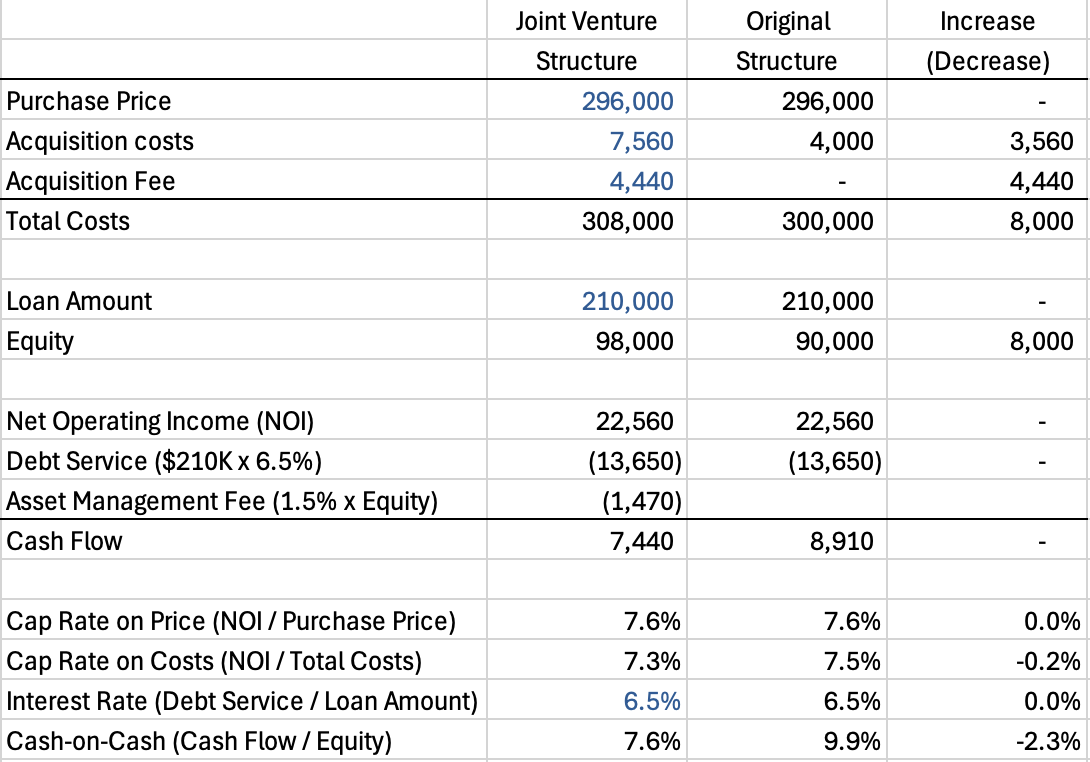
Table 1: Increased Costs of Joint Venture Structure
You should notice something else from the table. Two of the key return metrics went down: (i) cap rate on costs from 7.5% to 7.3% and (ii) cash-on-cash returns from 9.9% to 7.6%.
The cap rate on costs went down because the NOI remained constant while the costs increased from $300,000 to $308,000.
The cash-on-cash return went down for two reasons: (i) increased equity —$90,000 to $98,000 — due to the acquisition fee and increased structuring costs and (ii) the 1.5% of equity asset management fee you are charging. Any fee that is a percentage of equity charged on an annual basis directly reduces the cash-on-cash return.
Key Takeaways
Fees Reduce Returns: charging fees directly reduces the deal returns, especially cash-on-cash returns. The legal and structuring costs of a joint venture also increase costs.
Don’t Get Too Greedy: choose the fees and equity structure you feel are reasonable, recognizing that the LP investors will need to get excited about the returns after fees. Do the research to see what other GPs are doing.
The Process of Raising Equity
Books could be written on the process of raising equity. There are teams at large real estate companies that focus on it.
Here are what I believe are the most important considerations for individual investors acting as a GP:
Great Deals Sell Themselves: it starts with having a great deal. Find a deal you are excited about and your potential LPs should get excited too.
Be Realistic: don’t load the deal with too many fees. Look at the after fees returns and think about whether the LPs will get excited about these returns.
Start Small: you may want to anchor low on fees and promote structure for your first deal or two. Once you have a successful track record, you can justify charging more.
Look At $$$, Not Just %: the asset management fee above starts at $1,470 per year. This is just over $100 per month. You may find it is better to skip this fee and maintain a higher cash-on-cash return percentage. Instead, you could consider a disposition fee.
Whatever structure you choose, you will still need to follow a typical sales process to raise equity:
Create clear marketing materials that describe the deal and returns.
Reach out to many investors, likely starting with your friends and family.
Get enough investors to commit the 95% of equity.
Get everyone to sign the joint venture agreement and fund their money.
Do all of this fast enough to meet your due diligence and closing deadlines.
None of this will be fast or easy. You will need to work hard and persevere.
The Financial Performance
You are a hard worker. You persevere and raise the 95% of equity from the LPs. Now let’s look at the financial performance under this fee and promote structure.
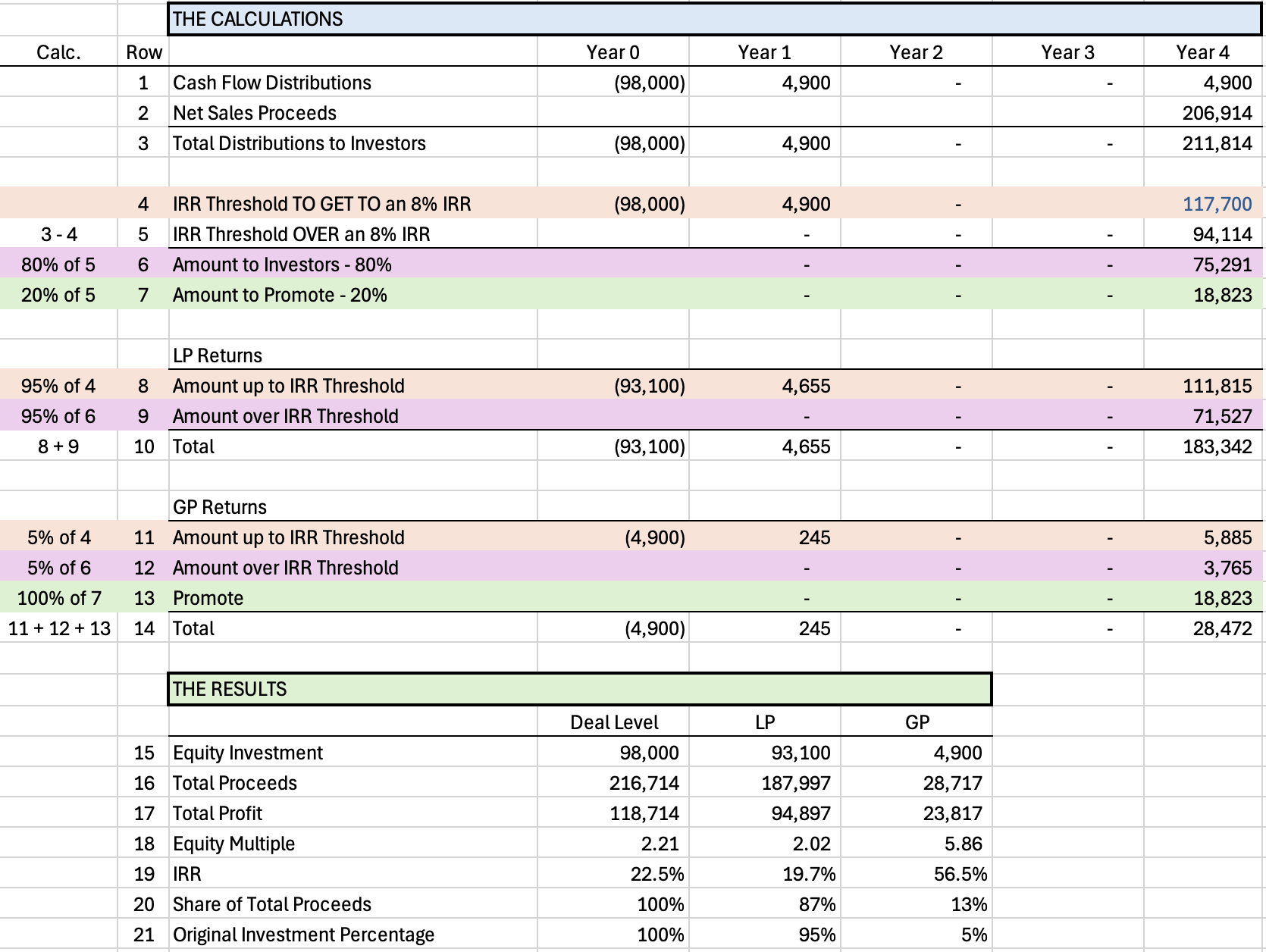
Table 2: Equity Waterfall With Promote Structure
The Calculations
Everyone gets an equal share of the distributions up to an 8.0% IRR. Above this 8.0% IRR, the distributions go 80% to all investors (LPs and GP) and 20% to the GP as promote. Here’s the breakdown.
Deal Returns (rows 1-3): before any promote calculations.
Promote Calculations (rows 4-7):
Row 4 shows the amount TO GET TO an 8.0% IRR <shown in orange>.
Row 5 shows the amount OVER the 8.0% IRR.
Row 6 shows 80% of row 5 going to all investors (LPs and GP).
Row 7 shows 20% of row 5 to promote (GP only).
LP Returns (rows 8-10)
Row 8 shows the LP getting 95% of the amount TO GET TO an 8.0% IRR <shown in orange>.
Row 9 shows the LP getting 95% of the amount OVER an 8.0% IRR <shown in pink>.
Row 10 adds up row 8 and 9 for the total LP returns.
GP Returns (rows 11-14)
Row 11 shows the GP getting 5% of the amount TO GET TO an 8.0% IRR <shown in orange>.
Row 12 shows the GP getting 5% of the amount OVER an 8.0% IRR <shown in pink>.
Row 13 shows the GP getting all of the promote from row 7 <shown in green>.
Row 14 adds up rows 11-13 for the total GP returns.
It’s a lot of math and not for the faint of heart. Understanding promote models (aka equity waterfalls) takes time and practice. You may want to re-read this section several times.
The Results
All of this results in the LPs and GP getting different returns as shown in rows 15-21.
Because the deal did so well (22.5% IRR - row 19), the promote was big ($18,823 - row 13) and the GP had a strong equity multiple (5.86 - row 18) and IRR (56.5% - row 19).
The LPs still did very well with a 2.02 equity multiple and a 19.7% IRR.
Everyone did well, but the GP’s equity multiple and IRR are much better than the LPs’. The GP invested 5% of the equity (row 21) and earned 13% of the total proceeds (row 20). That is the power of promote.
The Key Takeaways
So what do you make of all of this?
Here are my key takeaways:
The Joint Venture Structure Reduces LP Returns: charging fees reduces the deal returns, especially cash-on-cash returns. There is also the legal cost of structuring a joint venture agreement. The promote further reduces the investors’ returns, so only strong performing deals will be able to support this joint venture structure.
Everyone Wins If the Deal Does Well: there were no bad results in this example. Both the LPs and the GP did well, doubling their money in 4 years.
If the Deal Does Well, the GP Does REALLY Well: in terms of equity multiple and IRR, the GP did really well. They invested $4,900 (row 15) and pulled out $28,717 (row 16) in proceeds resulting in a 5.86 equity multiple before tax. This is an amazing way to turn limited investment funds into bigger dollars in a way you couldn’t do if investing by yourself.
IRR & Promotes Are Very Sensitive to Sale Proceeds: look at how much of the deal performance came from the sale: $206,914 (row 2) of $216,714 (row 16). Over 95%! Remember our sensitivity table from the case? Let’s look at an updated version, taking into account the GP/LP structure. Look at the IRRs below. If the rents were lower, the IRR barely reaches (or doesn’t reach) the promote threshold. Deals and promotes are highly sensitive to how well the deal does at time of sale.
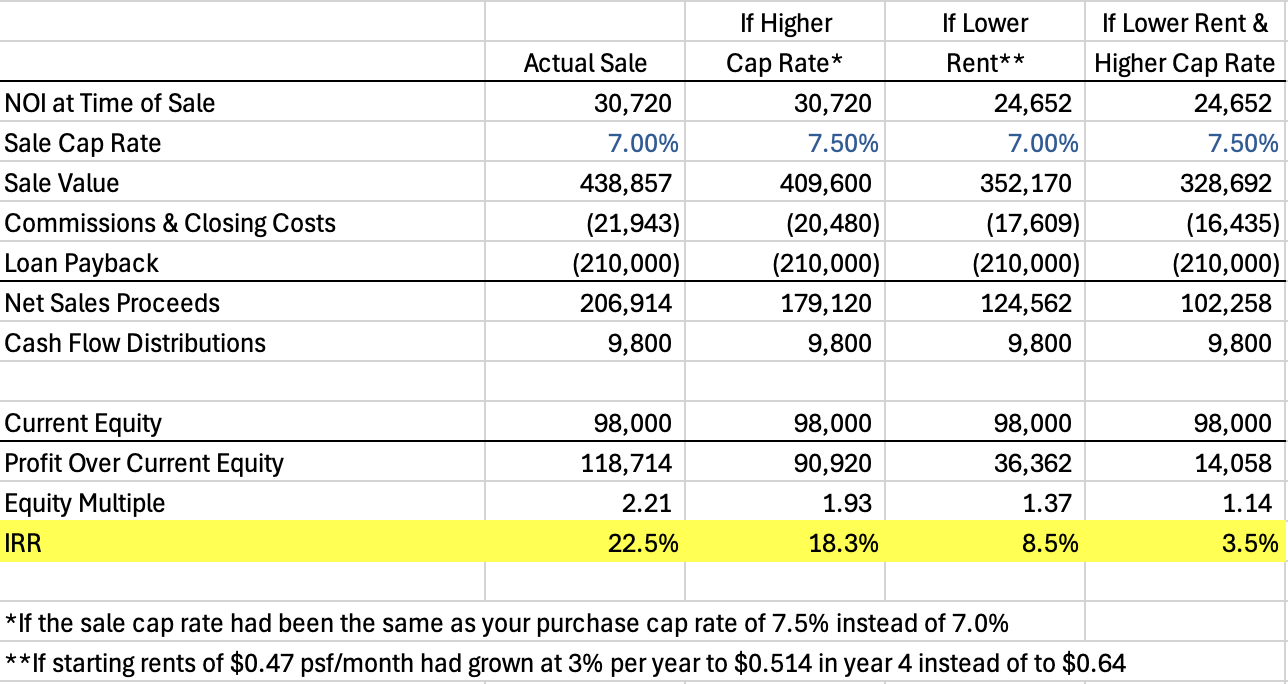
Table 3: IRR Sensitivity
Raising money from LPs is more expensive and a lot more work, but for the right deal it can be an excellent way to turbocharge your returns.
Try adding a zero to “The Results” from table 2: you invest $49,000 (row 15) and make total proceeds of $287,170 (row 16). Bigger deals = bigger dollars.
But remember to walk before you run. Do a deal or two on your own to develop your real estate investing skills.
By learning the fundamentals, you will drastically increase your chances of success when considering becoming a GP.